zelin0802 / October 27, 2026

Bell & Ross replica watches for sale

Bell & Ross replica Sinters Ceramic at 1,450°C and Loses 23% of the Case. The Math Is Why AI Belongs on the Factory Floor.

Bell & Ross has been working with high-tech ceramic since the BR 01 Ceramic in 2011, and the material has become central to the brand’s instrument-watch identity: light, scratch-resistant, colour-stable, and visually distinct from steel or titanium. The manufacturing process behind that identity is less glamorous and more exacting than the marketing suggests. Zirconium oxide powder is mixed with polymer binders and sintered at approximately 1,450°C — a temperature that would melt most metals — to vitrify the mixture into a homogeneous, robust ceramic .

During sintering, the material shrinks. Bremont’s own materials documentation puts the figure at 23% . Bell & Ross’s process involves the same physical reality: a powder compact becomes a dense ceramic body, and the dimensions of the finished case are not the dimensions of the mould. The Bell & Ross ceramic case shrinkage control problem is therefore not a cosmetic issue. It is a dimensional problem that determines whether a case will accept a movement, a bezel, a crown and a caseback to the tolerances a best luxury watch requires.

Why shrinkage is harder than it sounds

A 23% linear shrinkage is manageable if it is uniform. It is not uniform. Shrinkage depends on powder batch, moulding pressure, binder distribution, kiln position and thermal profile. A complex case geometry — the Bell & Ross square case with its four signature screws, its bezel ring, its lugs — shrinks differently in different regions. A deviation that looks acceptable at the green-body stage can emerge after sintering as a dimensional error or a cosmetic defect that only becomes visible once the case is finished.

Bell & Ross’s response has been to treat the process itself as the object of rigour. The brand describes “particular attention to the rigour of the production process” since its first ceramic watch, and its current ceramic references involve satin and polished surface treatments with micron-level edge finishing . That language is a signal: the brand knows that the difference between a ceramic watch that feels precise and one that feels approximate is won or lost in the kiln, not in the design studio. reviewluxurystore.com

The inspection gap that AI addresses

The conventional quality-control answer to a variable sintering process is sampling. Pull a batch of components, measure them, and adjust the process if the sample drifts. Sampling works when the process is stable and the cost of a defect is low. It works less well when the defect is a dimensional deviation that only manifests after 1,450°C and a full finishing cycle, by which point the cost of the defect is the entire component.

This is the gap where visual AI earns its place. A model trained on reference imagery of in-spec ceramic components can compare each unit against a standard and flag deviations that a human inspector sampling a fraction of output would miss. The industry’s own survey data points in this direction: 38% of Swiss cheap watch-industry respondents plan to apply AI to quality control and visual inspection within twelve months . Bell & Ross’s ceramic line is exactly the kind of production environment where that application has a clear economic logic, because the cost of a late-detected dimensional error is high and the volume is sufficient to justify a systematic inspection layer.

The same measurement infrastructure supports a second function: a visual fingerprint tied to the specific item. The Rapaport analysis of AI in watchmaking notes that digital product passports are among the trends AI outranked in executive priorities, but the underlying capability — recording what a specific physical object looked like at the point of production — is a natural by-product of an inspection system . For a ceramic watch marketed on finish consistency and material integrity, that record is evidence that the material performed as specified.

What AI does not do in a ceramic manufacture

The temptation is to overstate the role. AI does not design the ceramic. It does not develop the zirconium oxide powder, set the sintering profile, or invent the surface treatment that gives Bell & Ross ceramic its particular satin-and-polish character. The material science and the process engineering are human achievements, and the brand’s authority rests on them.

What AI does is make the process legible at a scale human attention cannot sustain. The Rapaport study’s central finding is that luxury watchmaking uses AI for forecasting, quality control and early design while keeping final assembly manual . Hublot’s chief product officer puts the balance plainly: “most of the watchmaking operations are done as they were decades ago,” and the final stages of assembly, adjustment, decoration and evaluation still rely on skilled hands and eyes . A Bell & Ross ceramic case shrinkage control system does not change that. It gives the people who do rely on their hands and eyes a better record of what the kiln did before the component reached them. review luxury store

The honest conclusion is that ceramic is one of the clearest cases in watchmaking for AI-assisted inspection, precisely because the material’s behaviour is nonlinear, the defect modes are dimensional and cosmetic, and the cost of late detection is high. Bell & Ross did not need AI to make ceramic watches. But a production process that loses nearly a quarter of its volume to sintering is a process that benefits from being measured more completely than sampling allows.

Would a ceramic watch feel more or less impressive if you knew every case had been individually inspected by a model trained on reference components — or does the material speak for itself?
zelin0802 / April 18, 2026

replica Audemars Piguet

replica Audemars Piguet

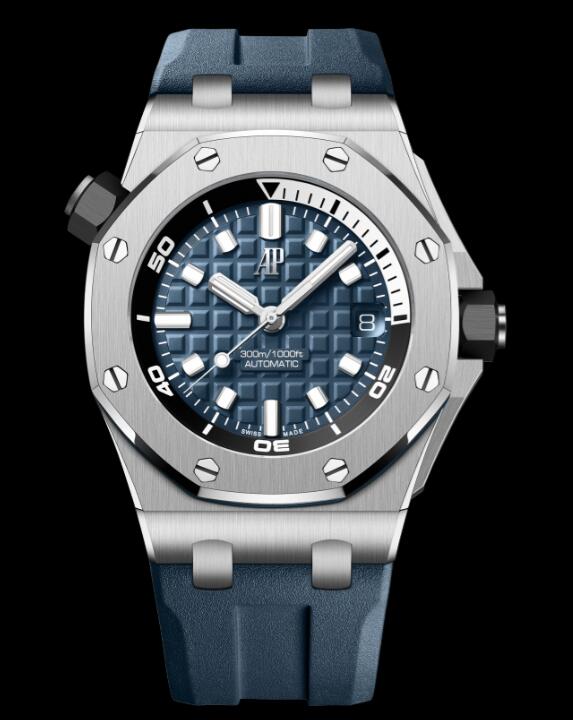
Audemars Piguet is a top-tier luxury watchmaking brand founded in Switzerland in 1875. Renowned for its pioneering designs, complex functions, and innovative materials, it is one of the few remaining independent watch manufacturers still managed by the founding family (Audemars and Piguet).

I. Brand History and Status

Founded: In 1875, Jules Louis Audemars and Edward Auguste Piguet founded the brand in Le Brassus, Vallée de Joux, Switzerland.

Core Spirit: Upholding the traditions of haute horlogerie while continuously pushing the boundaries of technology and aesthetics.

Historical Milestones

1882: Produced the first perpetual calendar pocket watch.

1892: Launched the world’s first minute repeater wristwatch.

1972: Launched the Royal Oak, pioneering the luxury sports watch.

1993: Launched the Royal Oak Offshore, defining the large-size sports watch.

II. Core Collections

  1. Royal Oak (1972)
    Designed by Gerald Genta, it is the brand’s most iconic collection.

Design DNA: Octagonal bezel with 8 hexagonal screws.

Impromptu stainless steel bracelet with a “Grande Tapisserie” dial.

Representative Models
16202ST (Jumbo Ultra-Thin): 39mm, classic steel, ultra-thin automatic movement.

15510ST: Basic automatic winding model, the first choice for entry-level modern Royal Oak.

26574ST (Perpetual Calendar): A representative of ultra-thin perpetual calendar complications.

  1. Royal Oak Offshore (1993) A more rugged, bolder, and sportier evolution, nicknamed “The Beast.”

Features: Larger case diameter (42mm+), enhanced water resistance, and more cutting-edge materials (forged carbon, ceramic, rubber).

Representative Models: 15720ST (Diving Watch): Professional diving watch, water-resistant to 300 meters.

26470 (Chronograph): A popular chronograph model, available in a variety of Audemars Piguet colors.

  1. CODE 11.59 (2019) The brand’s modern dress watch collection, blending classic and futuristic elements.

Features: Round multi-layered case, applied hour markers, transparent movement, understated elegance.

Representative Models: Automatic winding, tourbillon, perpetual calendar, and other complex functions.

  1. Royal Oak Concept (2002) A technical laboratory showcasing cutting-edge materials and complex craftsmanship.

Features: Exquisite skeletonization, innovative materials (such as forged carbon and titanium alloy), and ultra-complex functions.

III. Technology and Craftsmanship
Complex Functions: Setting industry benchmarks in areas such as perpetual calendar, tourbillon, minute repeater, chronograph, and grand complications.

Material Innovation: Pioneering the large-scale use of high-tech materials such as stainless steel, titanium, ceramic, and forged carbon.

Hand-finishing: All movements and cases undergo top-level hand-finishing, polishing, and beveling. https://www.reviewluxurystore.com

zelin0802 / November 15, 2025

Patek Philippe Aquanaut replica watches

The Patek Philippe Aquanaut series, launched in 1997, draws inspiration from the classic round octagonal case design of the Nautilus series. Emphasizing a casual sporty style, its unique appearance, practical materials, and diverse models have made it a highly recognizable sports watch series for the brand. The following is an introduction to its core design, classic sub-series, and representative models: Core Design Highlights
Identical Appearance and Materials: The most striking feature of this series is its round octagonal bezel. The case employs alternating polished and brushed finishes, creating a striking contrast in texture. The dial features a signature checkered pattern, paired with applied hour markers and hands with luminescent coating, balancing aesthetics and nighttime readability. The strap is made of a highly durable composite material, not only scratch-resistant but also resistant to seawater and UV rays. It features the brand’s patented four-clasp folding clasp for a secure and convenient fit.

Reliable Movement Configuration: Most discount replica watches in the series are equipped with Patek Philippe’s in-house automatic movements, some using the CH 28-520 series movement, and others using the 26-330 S C movement. All are equipped with a Gyromax® balance wheel and Spiromax® hairspring, with a power reserve generally between 35 and 55 hours. They are accurate and stable in timekeeping, and all bear the Patek Philippe seal, guaranteeing the high quality of the movement. Furthermore, most models are water-resistant to 30 meters, with some chronographs reaching 120 meters, meeting everyday water resistance needs.

Classic Sub-Series and Representative Models:

Aquanaut Luce Series: Designed specifically for women, often featuring gemstone settings to highlight its sophistication. For example, the 5268/200R features a rose gold case, a bezel set with 48 diamonds, a grey-brown dial embossed with the series’ signature pattern, and a matching composite strap, exuding elegance while maintaining a sporty feel. The 7968/300R “Rainbow” chronograph model boasts a bezel inlaid with colored baguette-cut sapphires and diamonds using an invisible setting technique, paired with a mother-of-pearl dial, perfectly blending sporty style with jewelry craftsmanship. Additionally, the 5267/200A model is available in both stainless steel with baguette-cut diamonds and a khaki-green dial, and in a version with a black dial, catering to different style preferences.

The Aquanaut Chronograph series: As the series’ sporty flagship, it features a flyback chronograph function. For example, the 5968A-001 features a stainless steel case with a black gradient dial and striking orange chronograph markers. It also comes with two composite straps, one black and one orange, suitable for various occasions. The 5968R-001, on the other hand, uses a rose gold case with a brown sunburst gradient dial and a matching strap. Its central seconds hand can also be used as a regular seconds hand, enhancing its practicality. This model also boasts an increased water resistance of 120 meters. richard mille rm 33-02 automatique

Basic Function Models: Focusing on hour, minute, second, and date displays, these models balance simplicity and practicality. A typical example is the 5168G-010, commonly known as the “Jumbo.” It features a 42.2mm white gold case with a khaki-green dial featuring a checkered pattern and a matching composite strap. The overall style is fresh and suitable for those who prefer a casual look. The movement has a power reserve of 35-45 hours, sufficient for everyday wear.

The Aquanaut Travel Time series features multi-time zone functionality, making it a great travel companion. The flagship model, 5164G, is equipped with a 26-330 S C FUS automatic movement, supports a second time zone display, and the date display automatically matches the local time, solving the time reading and date adaptation issues when traveling across time zones, balancing practicality and convenience. replica jacob & co astronomia solar

zelin0802 / November 21, 2022

Richard Mille presents a new gray cermet in the RM 11-05 Automatic Flyback Chronograph GMT

Long ago, Richard Mille earned his place among companies introducing new avant-garde materials into watchmaking – from ceramic to forged carbon to quartz TPT and more. By using its new exclusive gray cermet material in the new RM 11-05 Automatic Flyback Chronograph GMT, the automotive and aerospace-influenced brand further underscores its status as a materials innovator.

Like Richard Mille’s ultracomplications, the RM 11-05 packs many functions into its 50mm x 42.7mm tonneau-shaped case, all driven by its skeletonized self-winding movement: flyback at 6 o’clock and Chronograph counter at 9 o’clock; GMT display with luminous hands, easily adjustable via push button (located on case at 9 o’clock); Annual calendar with semi-instantaneous large date at 12 o’clock, And the month is displayed in Arabic numerals on the scale at 5 o’clock. Operated by stylishly designed pushers between 1 and 2 o’clock and 4 and 5 o’clock, this chronograph also includes a countdown mode that uses a skeletonized disc with 60-minute markers instead of hands so the user can read The number of minutes elapsed and the number of minutes remaining.

The warm gray color of the cermet case comes from a mixture of metal zirconium and high-performance ceramic inserts, heated and pressed together to form a homogeneous whole, in particular excluding elements such as nickel and cobalt – usually used for such hard materials, But it is considered a “bad glue” for fake Richard Mille‘s partner, microtechnology company IMI Group, to comply with Europe’s REACH chemical safety standard. The gray cermet, which is less dense than titanium and has a hardness of 2,360 Vickers – almost equal to diamond’s 2,400 Vickers hardness – is the result of a process called “flash sintering,” which combines a series of powerful Pulse added to the classic hot stamping process. The substance is used in ballistics, aerospace airframe components and brakes on racing vehicles,

Richard Mille’s Caliber RMAC3 movement, visible behind a barrel-shaped sapphire window on the case back, features all the technological advancements the brand is known for, including a skeletonized baseplate and bridges in grade 5 titanium; variable geometry rotor, which allows the mainspring to be wound according to the user’s activity level; a 50-hour power reserve stored in twin barrels for longer-lasting performance; and titanium spline screws (also used to assemble the case) for more Good torque control.

Manufacturer: Richard Mille
Reference number: RM11-05
Functions: Hours, minutes, seconds, chronograph with flyback and countdown, annual calendar with incorrect date and month display, GMT
Movement: Caliber RMAC3, self-winding, skeletonized, baseplate and bridges in grade 5 titanium, wet-blasted and PVD treated, chamfered and hand-polished, polished pivots, diamond-polished sink, bevelled wheels, 68 jewels , 28,800 vph, 50-hour power reserve
Case: Carbon TPT case, grade 5 titanium caseback, gray cermet bezel; grade 5 titanium crown; anti-glare sapphire crystal, water resistant to 50 meters
Bracelet and Clasp: Rubber Strap
Dimensions: Diameter = 50mm x 42.7mm, Height = 16.15mm

It’s hard to believe that such a popular watch comes from a company that was almost founded in the days of Swiss watchmaking. Founded by French businessman Richard Mille in 1999, Richard Mille SA did not sell its first watch until 2001! How they manage to compete with the more established high-end Swiss brands that have been in business for over 100 years is a truly monumental feat.

RM11 design
The RM11 is a true heavyweight watch that looks impressive on the wrist. As Eric describes it, “This watch is a total bully.” As a result, anyone wearing this behemoth from Richard Mille is sure to be delighted with the intense, radiant “watch game” (which has to be Eric’s most One of my favorite buzzwords) stands out. Despite its impressive size, this Richard Mille timepiece is extremely comfortable thanks to its curved design. To quote Eric…

“It has a square Tonneau design that fits very comfortably on the wrist. You can see it has a curved back. Once it’s on the wrist, it feels like a glove.”
The RM 11 model is named after the Brazilian Formula 1 driver who was also a personal friend of the company founder. No wonder this chronograph was designed to look like a complicated F1 car. As Eric explained…

“They’ve had this slogan for years that says ‘racing machine on your wrist.'” copy watch